
A short PowerPoint on Tendering
For More information contact us at Infor@tridentagltd.co.uk
Slide 1: What is Tendering & Types of Tendering – Training Overview
This session introduces the concept of tendering, a cornerstone of procurement practice, and explores the various types of tendering processes. Delivered by Trident Advisory Group, the training aims to equip participants with a clear understanding of how tendering works, its significance, and the different approaches organisations use to source goods and services competitively.
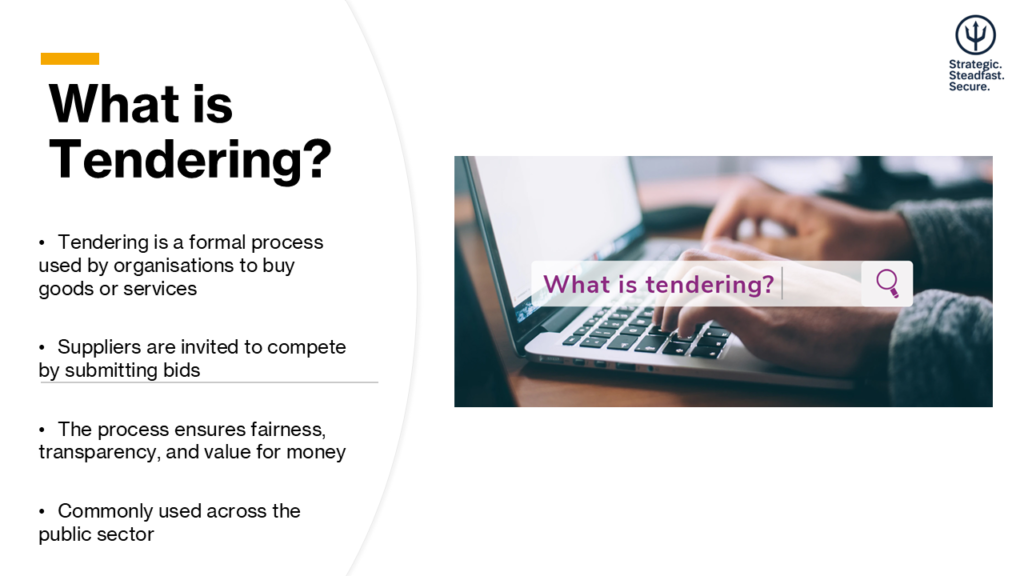
Slide 2: What is Tendering?
Tendering is a formal, structured process that organisations use to purchase goods or services. By inviting suppliers to submit bids, the process ensures fairness, transparency, and value for money. Tendering is especially prevalent in the public sector, where accountability and open competition are essential.
Slide 3: Why Organisations Use Tendering
Organisations adopt tendering to guarantee fair competition among suppliers, achieve the best value, and comply with legal and regulatory requirements. The process also helps reduce risk and enhances accountability, making it a vital tool for responsible procurement.
Slide 4: Where Tenders Are Advertised
Tenders are typically advertised on official platforms such as the UK Government’s “Find a Tender” service, local authority portals, NHS procurement sites, and specialist defence or sector-specific portals. These channels ensure that opportunities are accessible and visible to a wide range of suppliers.
Slide 5: Types of Tenders
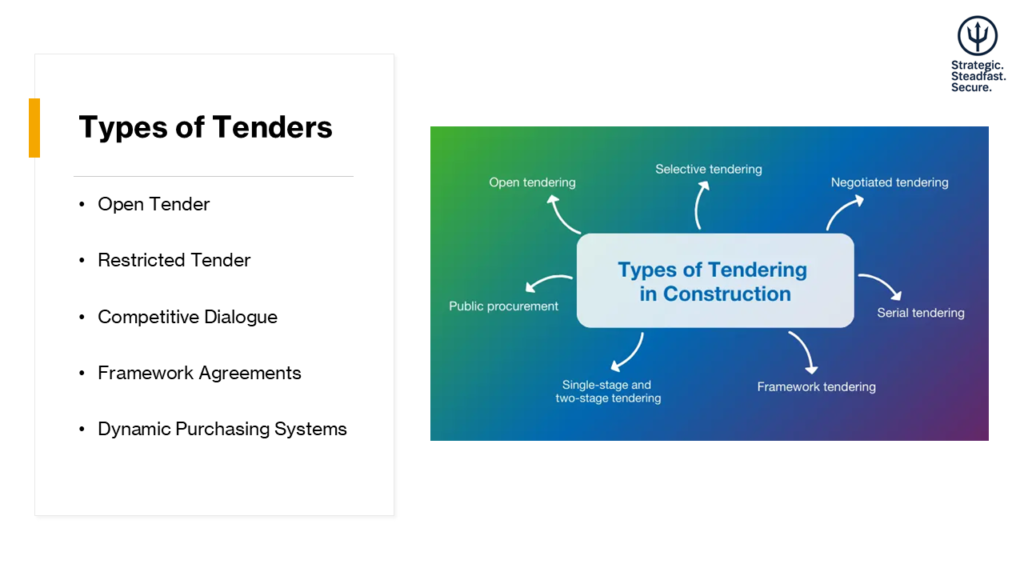
There are several types of tendering procedures, including Open Tender, Restricted Tender, Competitive Dialogue, Framework Agreements, and Dynamic Purchasing Systems. Each type is suited to different procurement needs and levels of complexity, offering flexibility in how organisations engage the market.
Slide 6: Open Tender
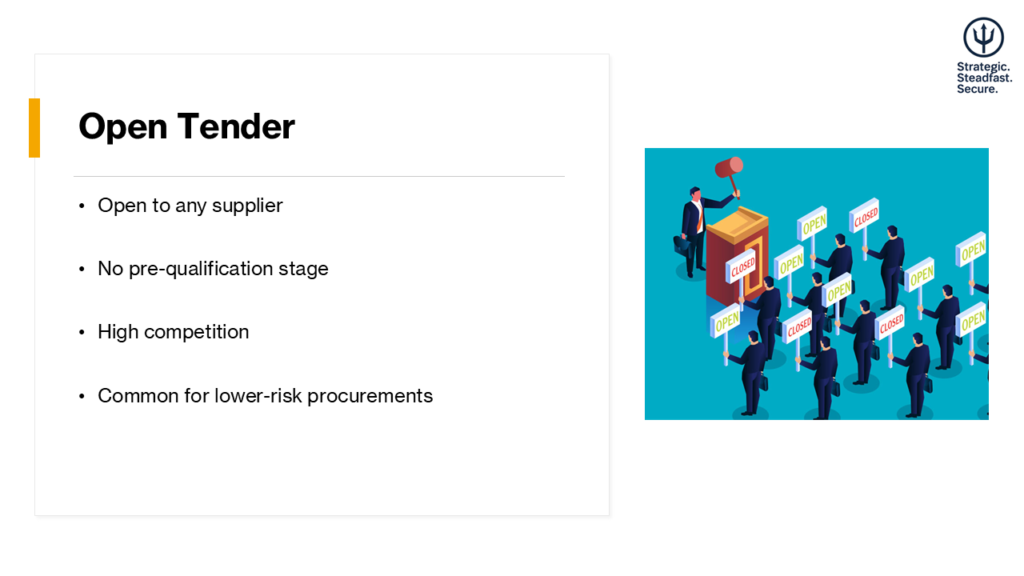
An Open Tender is accessible to any supplier, with no pre-qualification stage. This approach encourages high competition and is commonly used for lower-risk procurements, allowing a broad supplier base to participate.
Slide 7: Restricted Tender
Restricted Tendering involves a two-stage process. Suppliers first complete a Selection Questionnaire (SQ), and only shortlisted candidates are invited to submit full tenders. This method reduces the evaluation workload and is useful when a large number of suppliers might be interested.
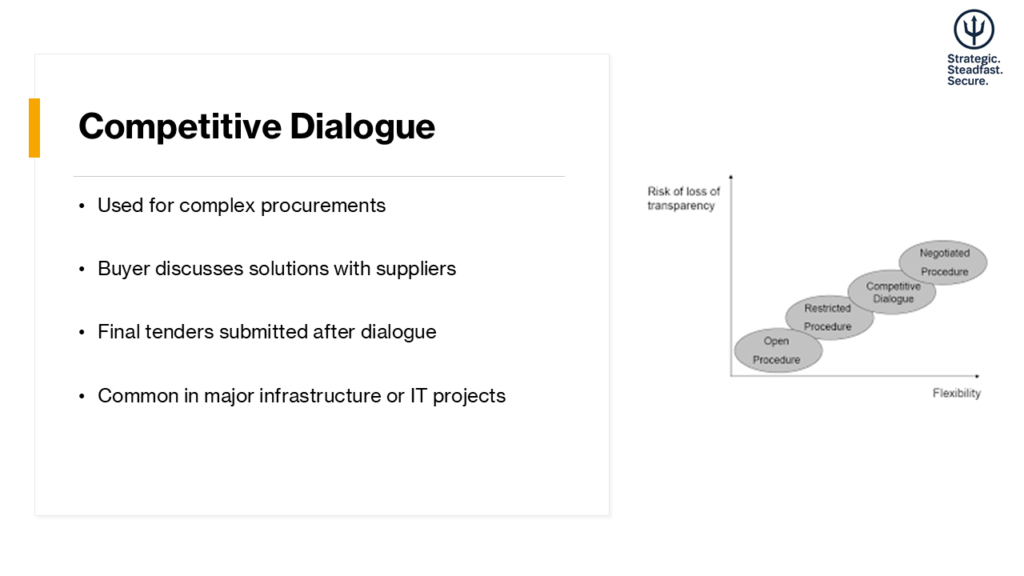
Slide 8: Competitive Dialogue
Competitive Dialogue is used for complex procurements where solutions are not straightforward. The buyer engages in discussions with suppliers to develop suitable solutions before final tenders are submitted. This approach is common in major infrastructure or IT projects.
Slide 9: Framework Agreements
Framework Agreements establish a pre-approved list of suppliers who can be called upon to deliver goods or services during the framework’s term. This enables faster procurement and is widely used in the public sector for recurring needs.
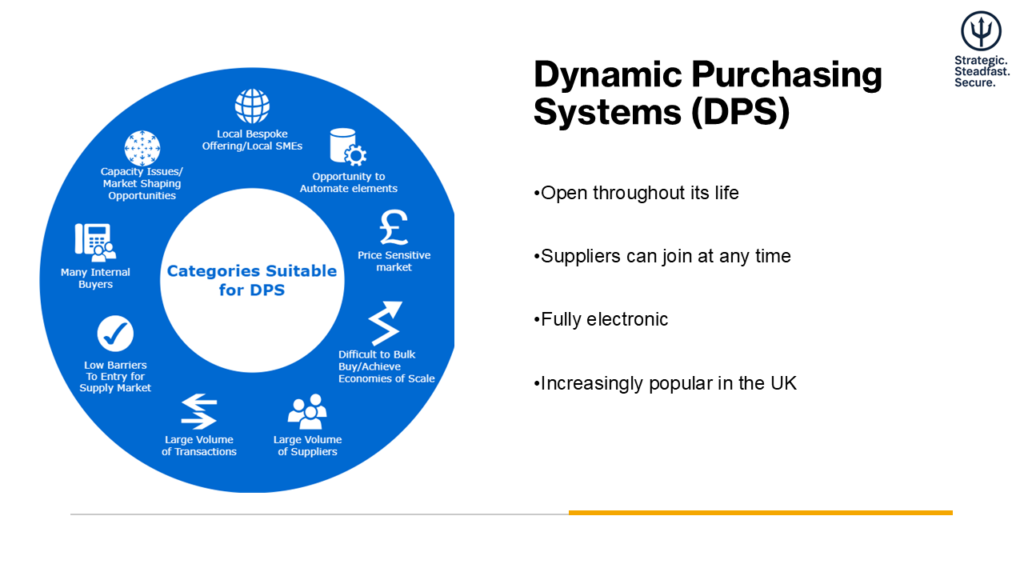
Slide 10: Dynamic Purchasing Systems (DPS)
A Dynamic Purchasing System is open to new suppliers throughout its life, allowing them to join at any time. Fully electronic and increasingly popular in the UK, DPS offers flexibility and is well-suited to categories with many suppliers and frequent transactions.
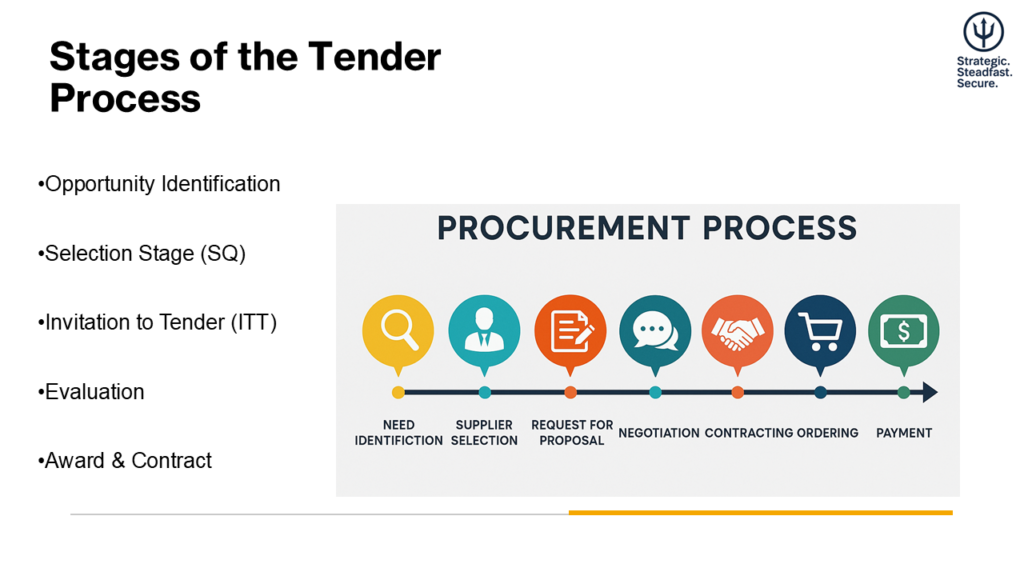
Slide 11: Stages of the Tender Process
The tender process typically follows several stages: identifying opportunities, the selection stage (SQ), invitation to tender (ITT), evaluation, and finally, award and contract. Each stage is designed to ensure a thorough and fair assessment of supplier capabilities.
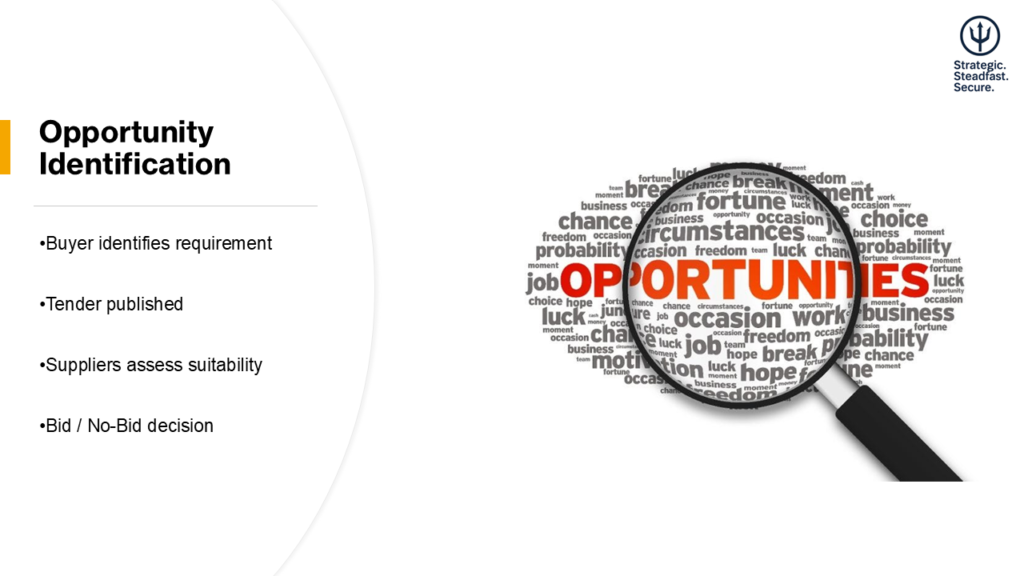
Slide 12: Opportunity Identification
The process begins when the buyer identifies a requirement and publishes a tender. Suppliers then assess the opportunity and decide whether to bid, based on suitability and strategic fit.
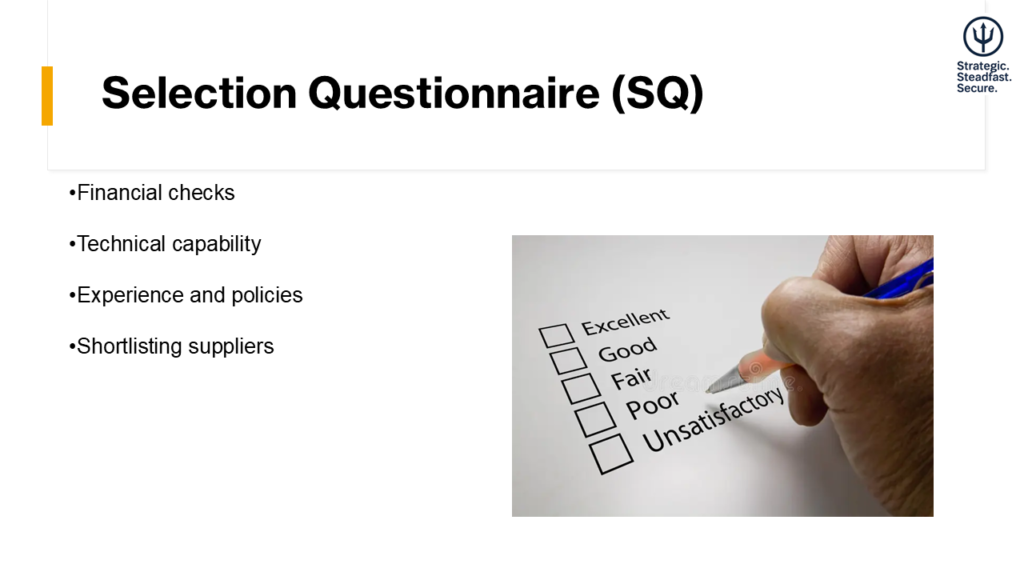
Slide 13: Selection Questionnaire (SQ)
At the selection stage, suppliers complete a questionnaire covering financial checks, technical capability, experience, and relevant policies. This helps the buyer shortlist suppliers who meet the minimum criteria for the contract.
Slide 14: Invitation to Tender (ITT)
Shortlisted suppliers receive detailed questions, pricing requirements, and method statements as part of the ITT. They must also demonstrate compliance with the buyer’s requirements, ensuring only qualified bids are considered.
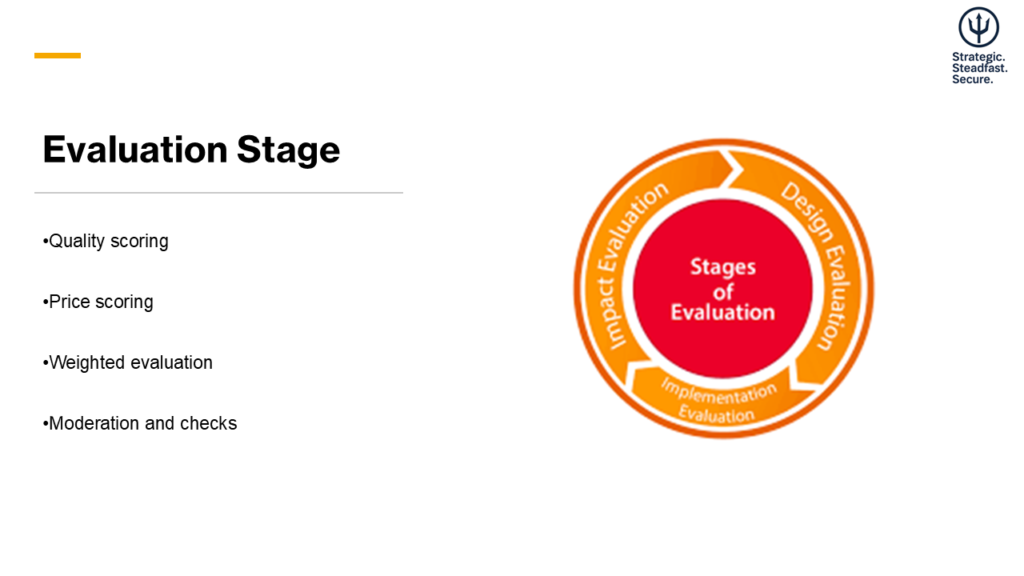
Slide 15: Evaluation Stage
Bids are evaluated based on quality and price, often using a weighted scoring system. Moderation and checks are conducted to ensure the process is robust and the best supplier is selected.
Slide 16: Award & Contract
Once evaluation is complete, the preferred bidder is selected. After a standstill period, the contract is formally awarded and mobilisation begins, marking the start of the supplier’s delivery.
Slide 17: Why Understanding Tendering Matters
A solid understanding of tendering improves bid success, reduces risk, ensures compliance, and builds long-term client confidence. Mastery of the process is essential for organisations seeking to thrive in competitive procurement environments.
For more guidance on Tendering email us at Info@tridentagltd.co.uk
Leave a Reply